
Most games explain their rules pretty quickly. Jump with this button, attack enemies, pick up items, use the map for navigation. But sometimes developers decide to ditch conventional gaming principles and build the entire experience around one unusual idea.
It's these kinds of projects that are especially memorable. In them, you don't just learn to control a character; you literally have to rewire your own thinking. Sometimes a game mixes several completely different genres, sometimes it turns scale into a puzzle, and other times it forces you to use your own memory instead of a familiar skill tree.
We've gathered games where strange, unusual, or non-standard mechanics become one of the main reasons to keep playing.
Thirsty Suitors

Thirsty Suitors is hard to describe with a single genre. It simultaneously features RPG elements, turn-based battles, skateboarding, cooking, and interactive episodes related to the main heroine's relationships with the people around her.
The combat scenes look especially unusual. Battles turn into a kind of psychological conflict, where opponents can use the hero's emotions and past relationships against them.
Between these clashes, the player can skateboard, cook food, and engage in other completely different activities.
As a result, Thirsty Suitors constantly changes the rules of the game and practically doesn't let you get used to one type of gameplay.
Maquette

Maquette is built around a mechanic that forces you to literally play with the scale of the world around you.
The player finds themselves inside a recursive space, where a small model can replicate the layout of the huge world around it. By changing the size of an object in one part of the space, you can affect its size in another.
In practice, this turns into a series of puzzles where an ordinary object can unexpectedly become the key to a solution.
The main pleasure of Maquette lies in the moment when the player finally understands the connection between two versions of the same space.
Donut County

Donut County's main mechanic sounds as strange as it gets: you control a hole in the ground that swallows objects.
At first, it fits small objects, but after each swallow, the hole gets bigger. Thanks to this, it starts to gobble up increasingly larger items.
From a simple idea, a full-fledged game system gradually emerges. The player observes the world around them and decides in what order to absorb objects to increase the hole and reach the next goal.
The mechanic seems absurd, but that's precisely why Donut County instantly stands out among other puzzle games.
Outer Wilds
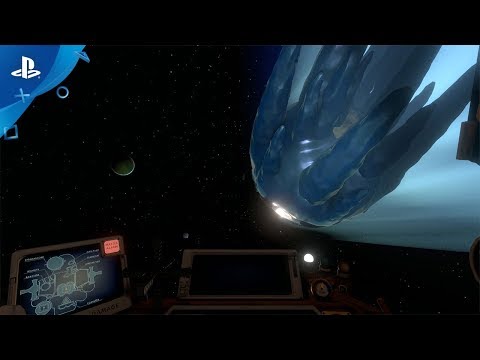
Outer Wilds uses an unusual concept where the player's own knowledge becomes the main form of progress.
The game's world is stuck in a time loop. After a certain interval, events repeat, and the player starts their journey anew.
But the information you gained during the previous attempt stays with you.
This completely changes the usual approach to progress. You don't necessarily have to become stronger, get new weapons, or unlock more powerful abilities. Sometimes the only thing you need to advance is to understand something you didn't know before.
The result is a unique kind of puzzle where your own memory becomes the main item in your inventory.
DAVE THE DIVER

DAVE THE DIVER constantly switches between completely different types of activities.
During the day, Dave goes underwater, where he dives, catches fish, and explores the ocean. And in the evening, a completely different job awaits him—managing a restaurant and serving customers.
The game doesn't stop there. New systems, mini-games, characters, and additional activities gradually appear.
The most unusual thing here is the constant switching between mechanics. One minute you're exploring the ocean depths, and a few minutes later you're running a restaurant.
DAVE THE DIVER turns the changing of game genres into one of its main features.
The Life and Suffering of Sir Brante
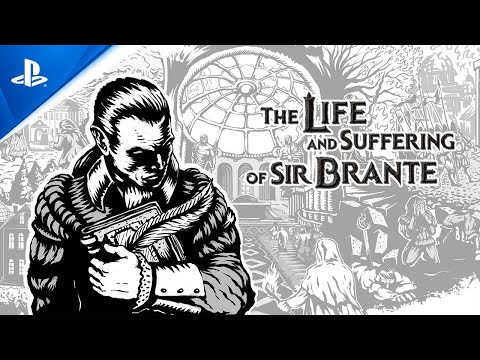
The Life and Suffering of Sir Brante turns a character's life into a full-fledged game system.
The main character grows up in a world with a rigid social hierarchy, and their origin directly influences their opportunities and how others treat them.
The player has to make decisions at practically every stage of the hero's life. Education, relationships, work, social standing, and other circumstances gradually shape their fate.
The result is an RPG where the main weapon isn't a sword or magic, but the player's choice.
Moreover, some decisions can have consequences much later, so even small actions have to be perceived as part of a larger chain of events.
Death Note Killer Within

Death Note Killer Within uses the familiar concept of social deduction but transplants it into the Death Note universe.
Players get different roles and hidden objectives. Some must figure out their opponents, others must keep their identity secret and complete their own tasks.
The main mechanic here revolves around information. You need to observe other players' actions, analyze their behavior, and try to figure out who you can trust.
As a result, an ordinary match turns into a psychological game where a wrong suspicion can be just as dangerous as a mistake in combat.
KLETKA

KLETKA builds its gameplay around an elevator, which simultaneously becomes your main means of transportation and a source of constant danger.
Players have to explore gloomy spaces, gather resources, and monitor the elevator's condition. At the same time, the elevator itself can't be perceived simply as a means of transport—it's an important part of the game system.
What makes the project especially unusual is the combination of cooperative interaction, limited resources, and the constant feeling that even a familiar safe space can stop being safe.
KLETKA turns an ordinary elevator ride into a full-fledged survival mechanic.
Human Fall Flat
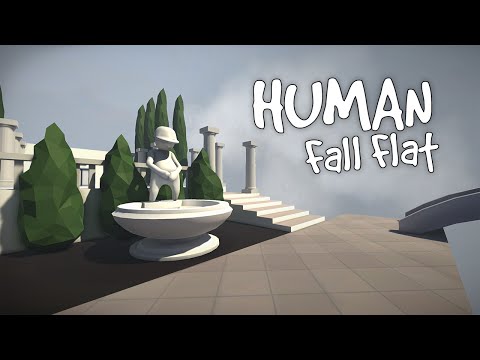
Human Fall Flat turns the most ordinary movement through a level into a genuine physics-based attraction.
The character here is intentionally clumsy. They fall, grab onto objects, swing, and constantly lose their balance.
It's the physics that becomes the main tool for solving puzzles. You need to drag objects, climb, push structures, and interact with the world around you, and the result is far from always what you imagined.
This system works especially well in co-op. A simple task like "carry a crate" easily turns into several minutes of chaos and completely unexpected solutions.
Disco Elysium

In Disco Elysium, the unusual mechanic is related to how the main character's consciousness is structured.
Instead of a familiar set of skills, many characteristics are presented as separate voices and facets of the character's personality. They can intervene in conversations, give advice, argue with each other, or push the hero toward certain actions.
The result is an RPG where combat is practically never the main way to solve problems.
Conversation, observation, logic, intuition, or even personality traits can open up completely different paths for events to unfold.
In the end, leveling up your character affects not only their strength but also how they perceive the world around them.
The Escapists 2

The Escapists 2 is unusual just by its concept: instead of simply completing linear levels, the player must plan their own escape from prison.
You can study the daily routine, collect items, create tools, look for weak spots, and gradually prepare your own plan.
Moreover, the same level can be completed in completely different ways.
You can try to dig a tunnel, use found items, change the character's appearance, or think of another path to freedom.
The game turns escape into a kind of constructor, where the main thing isn't reaction time, but planning.
Darkwood

Darkwood works with fear in an unusual way. The game hardly uses the familiar horror formula where the player constantly sees the source of danger.
A significant part of the tension comes from limited information.
In the dark forest, it's hard to understand what lies beyond your field of vision. During the day, you can explore the world and gather resources, and at night you have to fortify your shelter and prepare for what will happen after dark.
The player has to create a safe zone for themselves within a hostile world.
That's why Darkwood frightens you not only with what's happening on screen, but also with what the player cannot see.
What Remains of Edith Finch
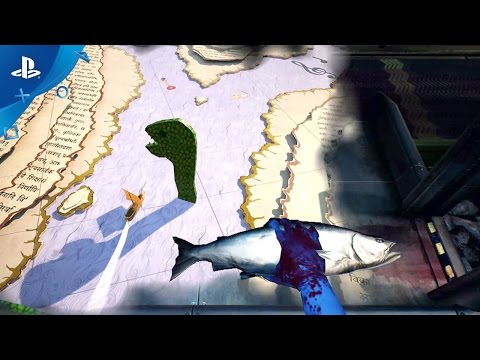
What Remains of Edith Finch uses an unusual approach to storytelling: practically every episode of the story can turn into a completely different game.
In one moment, the player explores a house, in another they find themselves inside a memory, and then they get a completely different set of actions and rules.
There's no familiar, constant gameplay loop here. Each story uses its own mechanics, visual style, and way of interacting with the world.
Thanks to this, the game constantly surprises. Just as the player gets used to one mechanic, the project already offers them a completely different one.
Conclusion
Strange game mechanics aren't necessarily something complex or experimental. Sometimes one unusual idea is enough to completely change the familiar gameplay.
In Donut County, the main tool is a hole; in Maquette, it's scale; in Outer Wilds, it's the player's knowledge; and in DAVE THE DIVER, the game itself constantly changes genres and rules.
It's precisely such projects that especially well demonstrate how diverse video games can be. They don't just offer a new world or characters—they force us to interact with the game space itself in a new way.
And sometimes it's the strangest mechanic that turns out to be the one you can't forget.