
Introduction: A Journey Through the World of RPGs
You know that feeling. Hours fly by unnoticed, and you're still sitting in your chair, trying to decide the fate of one seemingly insignificant NPC — because what if they turn out to be the key to a whole chain of events? Or you're racking your brain over a character build, rereading skill descriptions for the third time. A role-playing game isn't just a genre; it's a state of being. A state where your decisions carry weight, and the world reacts to your presence — sometimes with gratitude, but more often with a fist to the face or a philosophical dialogue with a worn-out boot.
Our list isn't an attempt to rank them in an indisputable hierarchy. Rather, it's ten different doors to ten completely distinct realities. There's room here for those who crave epic battles with gods in the ruins of forgotten civilizations, and for those who prefer heartfelt conversations with their own hallucinations in a crumbling hotel. Each of these games has redefined what it means to "play a role" in its own way. And now it's your turn — to choose which reality to step into first.
The Witcher 3: Wild Hunt
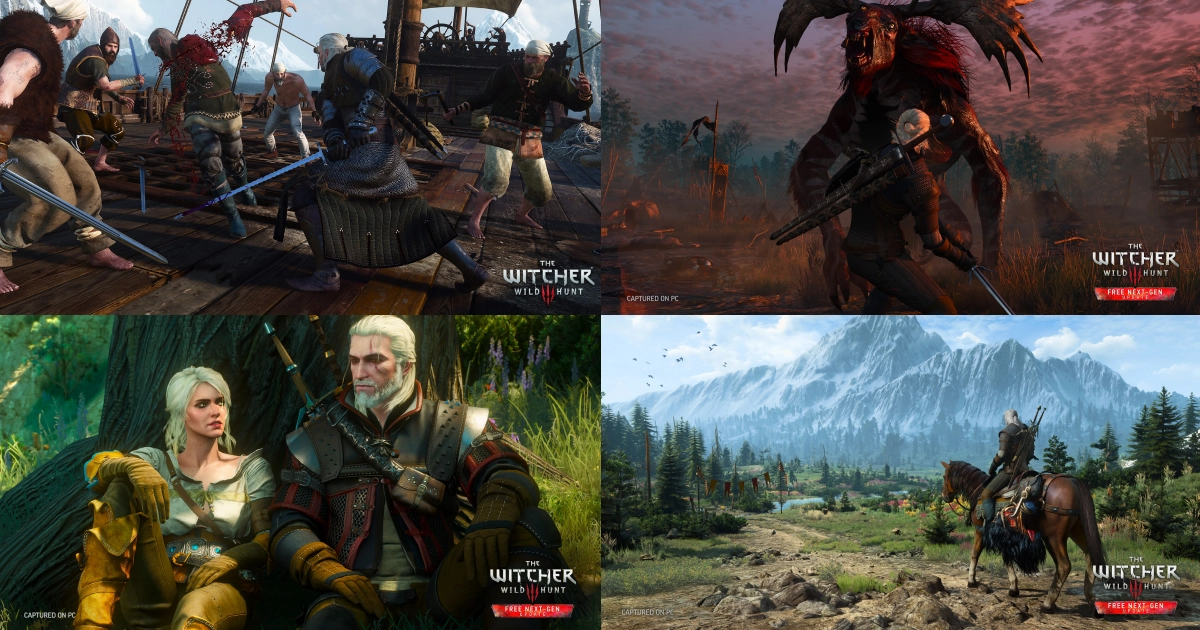 Do you remember the moment you realized a game had stopped being just entertainment? For me, it happened in The Witcher 3, on the island of Skellige. After yet another bloody skirmish with ghouls, I sat on a rock, Geralt silently watched the raging sea, and the soundtrack played "Fields of Ard Skellig." No quests, no pressure — just you, this harsh world, and the realization that every detail in it, from a dialogue with a village blacksmith to a brooch found on the road, is pieced together into a single, incredibly vibrant mosaic. CD Projekt RED didn't just make a great story about searching for Ciri — they created the gold standard for how an open world should breathe. The Continent lives by its own rules, and your moral choices, devoid of black-and-white tones, echo with consequences dozens of hours later. Swordplay and signs are solid, refined mechanics, but Geralt's main weapon is his ability to listen. You'll solve detective mysteries, participate in political intrigues, and play Gwent in a village tavern. And the expansions "Hearts of Stone" and "Blood and Wine" are, without exaggeration, separate masterpieces that elevate an already rich content to absolute perfection. This is the game you'll mentally return to Toussaint or the Seven Cats tavern for a month after finishing.
Cyberpunk 2077
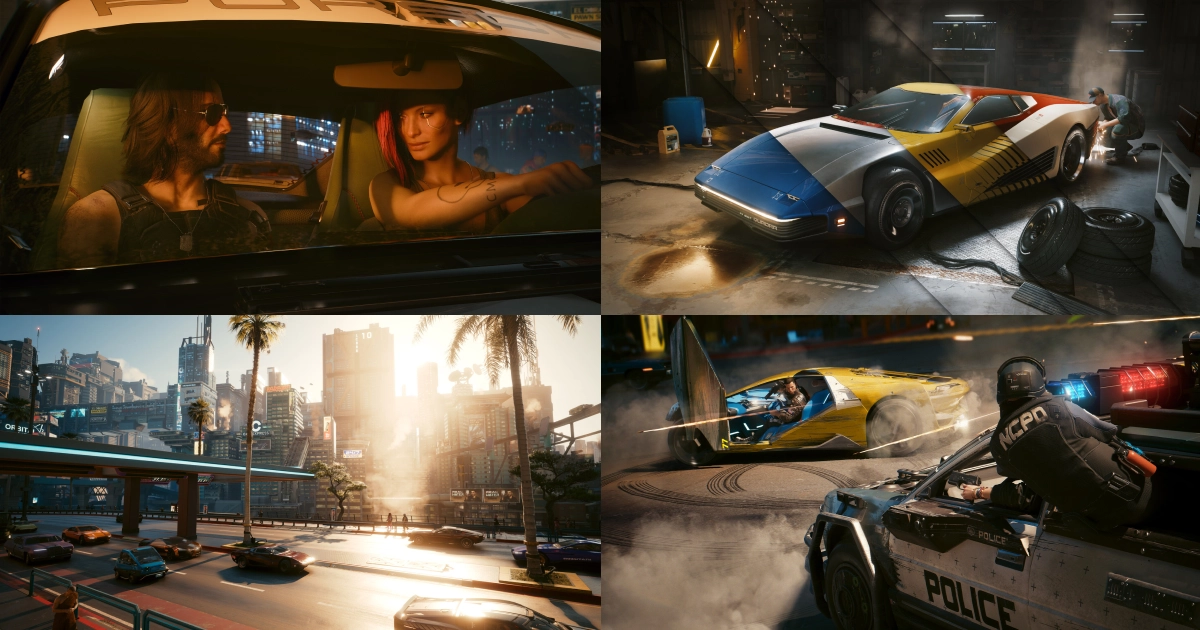 This is a story of a grand failure that was stubbornly and talentedly turned into a triumph. Remember the hype of 2020? I was one of those who launched the game on release day on a base PS4 — and it was a painful experience. But today, after the titanic work of CD Projekt Red and the release of the "Phantom Liberty" expansion, talking about Cyberpunk in the past tense is simply unfair. Night City has transformed from an unfinished skeleton into the densest, most detailed, and incredibly beautiful urban location in gaming history. You literally feel the weight of this metropolis: the smell of overcooked street food in the air, the screams of advertising holograms, the eternal rain washing sins off the skyscrapers.
The story campaign, especially in conjunction with "Phantom Liberty," is the gold standard of narrative design for a mature audience. The story of V and Johnny Silverhand isn't about saving the world, but about saving your own soul in a world where it's long been put up for sale. And the mission with Idris Elba? It's a Shakespearean tragedy in a world of spies and cybernetics that forces impossible moral choices. Yes, some mechanics still feel arcadey (especially driving), but when you're wreaking havoc in an underground Kang Tao factory workshop with a kinetic shotgun in hand, all the minor rough edges fade into the background. This is a rare case where a game not only justified its ambitions with a second chance but surpassed them, setting a new bar for visual storytelling.
Elden Ring
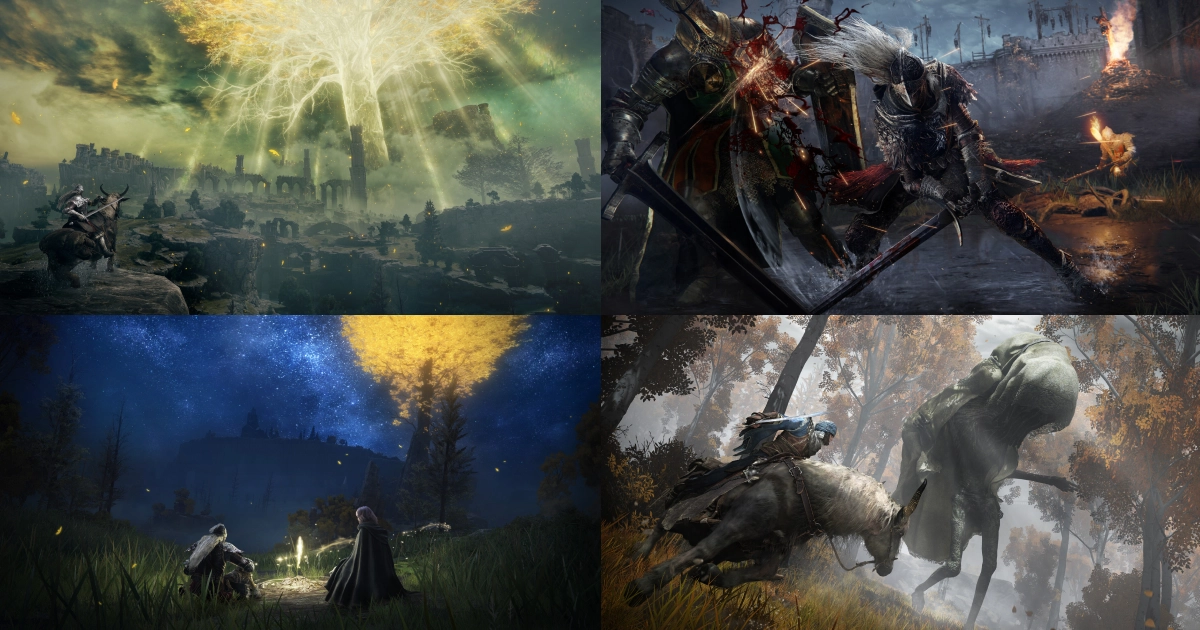 Do you remember that cold terror when you first emerged from the catacombs and saw the Erdtree? The screen darkens, the camera slowly pans, and a world of such unimaginable, overwhelming scale opens before you that it takes your breath away for a second. This isn't just a pretty cutscene — it's a promise. A promise that behind every hill, in every ruin, and at the bottom of every ravine lies a story, a boss, a treasure, or a deadly trap. FromSoftware took their signature, razor-sharp "souls-like" formula and poured it onto the vast plains of a true open world. And it worked with near-alchemical precision.
There are no quest markers or a to-do list for a hundred hours here. There's only your curiosity and your ability to read the landscape. A castle on a distant cliff? It's probably full of knights who will gladly turn you into mincemeat. A strange light shooting from the ground in a field? You have to go down there, even if you'll spend an hour running after lost runes afterward. Freedom in Elden Ring isn't freedom from danger; it's the freedom to choose how exactly you want to suffer and, ultimately, triumphantly overcome. You can spend dozens of hours exploring the dungeons of Limgrave without even approaching the first main boss. And every such discovery, every victory over a mini-boss in a godforsaken cave feels like a personal, hard-earned achievement. Yes, the game won't hold your hand; yes, it requires patience and a willingness to learn from your bones (mostly your own). But the reward is a feeling of absolute, unrestricted adventure in the most beautiful and cruel world Miyazaki's studio has ever created. After it, many other open worlds feel like well-kept but empty theme parks.
Kingdom Come: Deliverance II
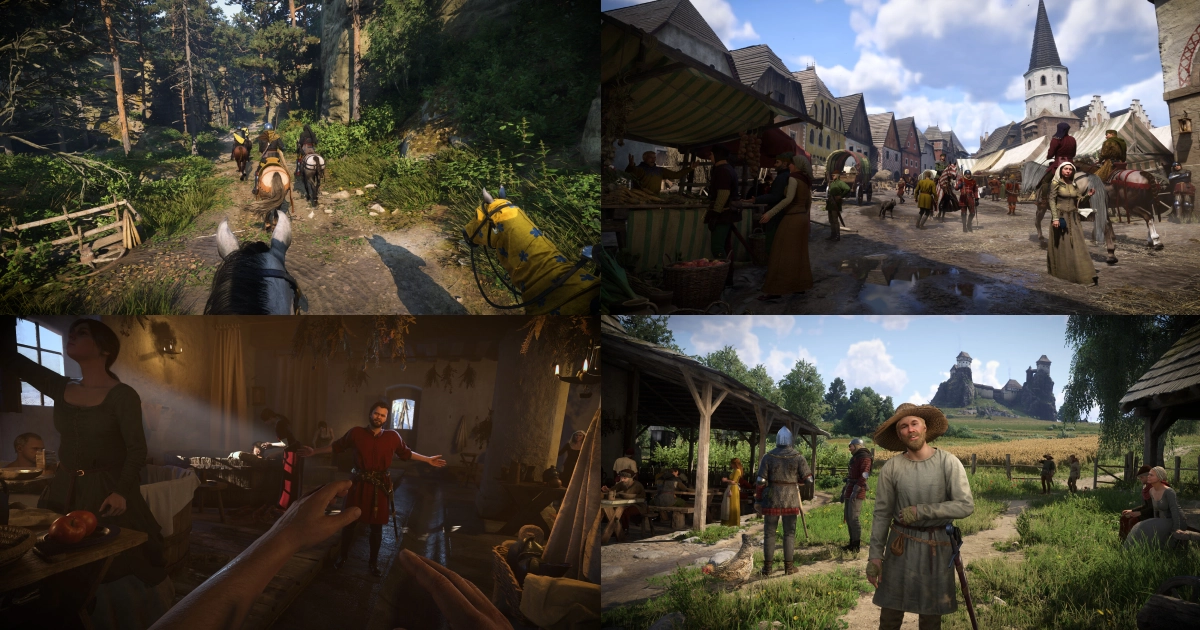 Do you remember that quest in the first game where you had to learn to read? Not magical scrolls, but ordinary letters. That feeling — that you're not an all-powerful hero, but an ignorant guy who can barely string syllables together — is the essence of Kingdom Come. The second part doubles down. This isn't fantasy where you save the world. It's a historical survival simulator in the skin of Henry, a simple guy in war-torn 15th-century Bohemia. Here, a sword in your hands feels like an unwieldy lump of iron, not a toy, and every skirmish with two bandits immediately turns into a fight for your life, not a dance with blades.
Warhorse Studios doesn't just create a world — they reconstruct it with almost frightening meticulousness. You'll have to keep your chainmail clean (rust slows you down), haggle for every coin, and master combat techniques not by leveling a skill in a menu, but through hours of training with a weapons master. It's a slow, methodical, and incredibly rewarding experience. Yes, the controls can feel clunky, and some mechanics overly harsh. But it's precisely this harshness that breeds a true sense of achievement. When you finally win a fair duel or successfully navigate complex negotiations, you understand that this is your victory, not that of a leveled-up character. This is the rarest type of RPG, where you grow as a player exactly as much as your hero grows.
Divinity: Original Sin 2
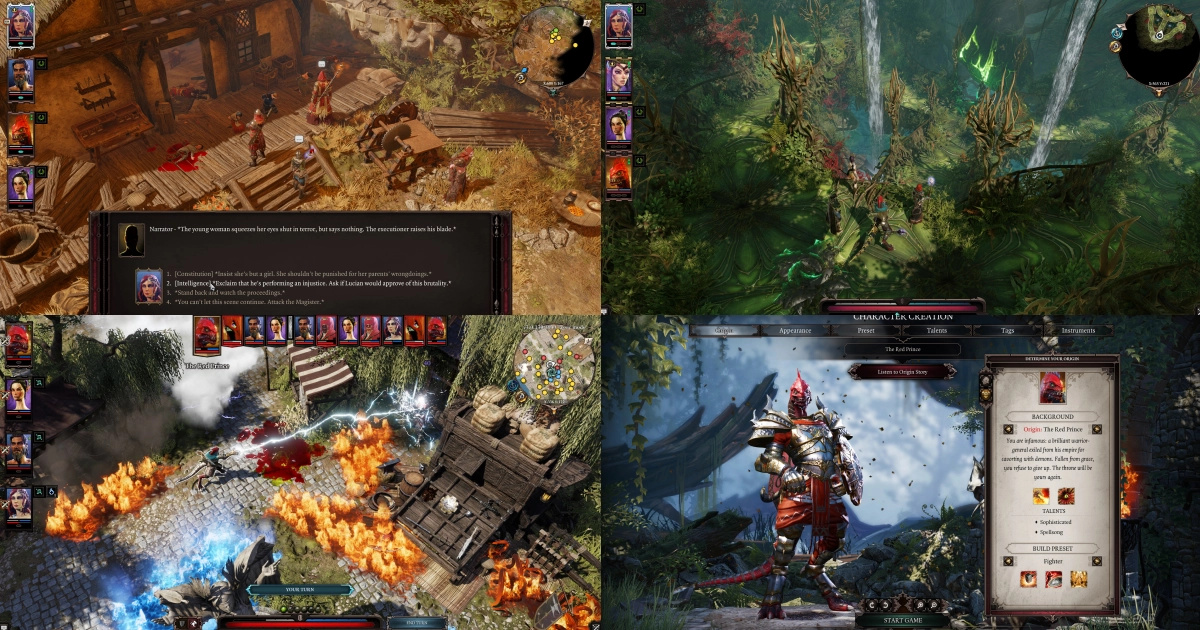 This is a game where your bad attitude isn't a bug, it's a feature. I remember how, right at the beginning on the Fort Joy beach, I ran into an unbearably arrogant mage. The dialogue didn't go well, and I, getting angry, simply... stole his magic book right from under his nose. The guards, naturally, pounced. Instead of a standard fight, I retreated to a narrow staircase and with one oil spell turned it into a deadly slide. When the guards charged down, I ignited the puddle with a second spell. That's how my campaign began — with the cold-blooded arson of three people over a bad mood. And the game's system didn't just allow this chaos — it encouraged it. That's the essence of Divinity: Original Sin 2: you don't choose from paths laid out by the developers; you draw your own, often bloody and absurd, route across the world map.
The combat here is a separate art form, chess on steroids. Every move must be planned considering elevation, surfaces (fire spreads over oil, water conducts electricity, blood empowers necromancy), and even weather. One of my boss battles turned into hours of tactical torment: I teleported him into a puddle of his own blood, froze him, then set him on fire again as he slid across the ice. This isn't just difficulty; it's a puzzle where you are both the destroyer and the inventor. The story doesn't collapse from your rampage but flexibly adapts, offering unique ways to solve quests — from persuasion to the total extermination of all witnesses. This is a rare case where the words "complete freedom" aren't a marketing slogan but an honest description of the gameplay.
Disco Elysium
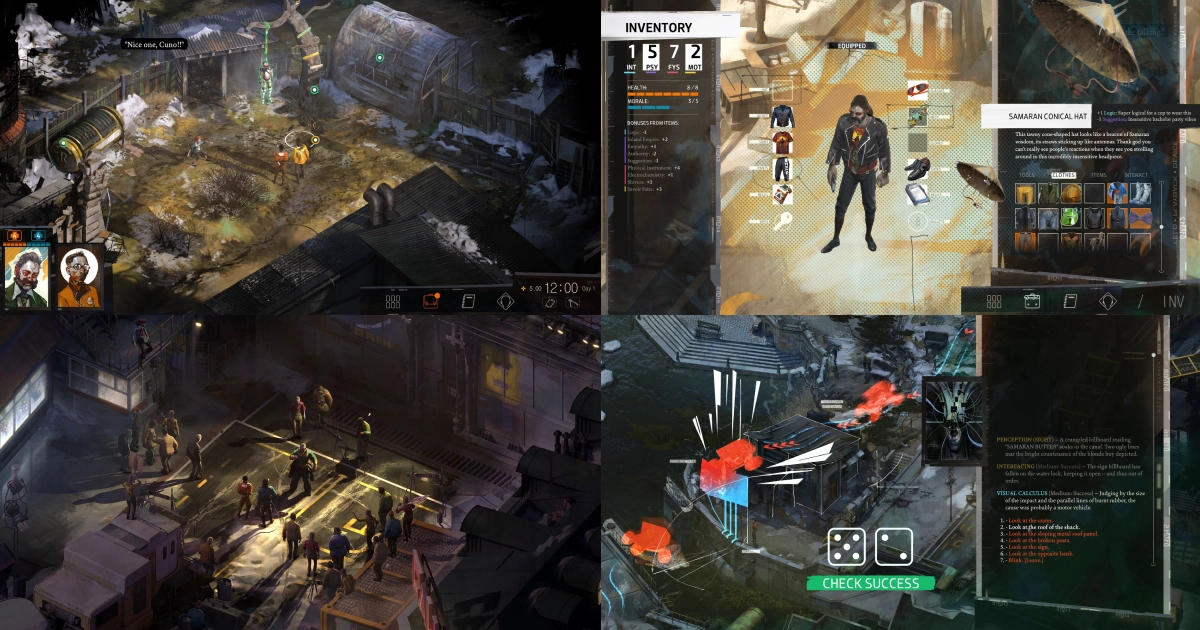 You wake up in a trashed room of a cheap hotel, not even remembering your own name, and the first thing you hear is voices in your own head. One of them is the ancient reptilian brain, another is the limbic system, and both are ready to comment on your every step, thought, and memory you try to fish out of the alcoholic-amnesiac fog. Disco Elysium isn't about leveling up a sword or magic spheres. Here you level up introspection, rhetoric, drama, encyclopedic knowledge, and even a nose for volumetric geometry. Each of these skills isn't a dry stat but a separate, intrusive character who will argue with other parts of your own psyche, offering insane, brilliant, or tragicomic courses of action.
The game is a pure detective story, where the crime scene is the entire city of Revachol, mired in ideological contradictions and postwar gloom, and the main mystery is you yourself. You can be a tragic cop-alcoholic trying to atone for the past, a star of apocalyptic community radio, a communist, a fascist, or all of the above at once. Every dialogue here is a masterfully written psychoanalytic session and political discourse, packaged in the form of witty, caustic, and infinitely human text. There's no combat here at all, but the tension in conversations is sometimes higher than in any dragon fight. This is a revelatory game that reshapes the idea of how deep and personal interaction with a virtual world can be. After it, you'll listen to the silence in your own head with slight disappointment.
Starfield
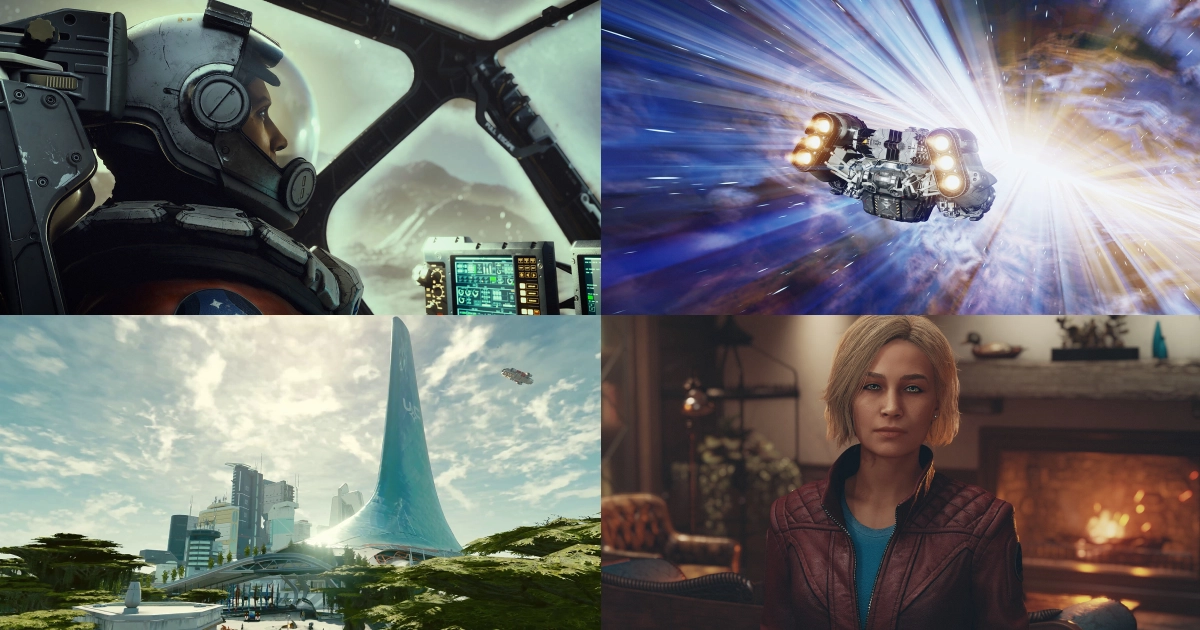 You stand on the surface of the Moon, the dust underfoot settling slowly, without the familiar Earth gravity. Before you is a crater, beyond it — the abyss of space and Saturn shining in the distance with its rings. And you just... walk. Wherever you want. This is the first hour in Starfield, and it perfectly captures its essence: a quiet, personal awe of scale. This isn't a story about saving the galaxy on a firefighting schedule; it's your story about how you became part of something bigger.
Bethesda's game took their proven formula — a world full of quests, factions, and randomly found stories — and launched it into orbit. Yes, there are fast-travel menus between planets, and that disappointed those expecting a flight simulator. But the magic unfolds on the surface. You land at a forgotten research station on a rainy planet, read the crew's logs, and piece together the tragedy that played out here decades before your arrival. There are hundreds of such stories, and they don't glow with exclamation marks on the map — you have to find them.
You can spend dozens of hours here without even approaching the main story about the Mysterious Artifacts. Build your own starship from scratch, from hull shape to living quarters layout. Set up an entire outpost on a distant frontier for resource extraction. Or simply join the ranks of the Space Rangers and dispense your justice among the stars. Starfield is a slow, thoughtful RPG for explorers and dreamers. Its cosmos can sometimes feel too quiet and procedural, but if you give it a chance, it will suck you in headfirst with exactly what we love about Bethesda: the unbridled freedom to create your own legend.
Dragon's Dogma 2
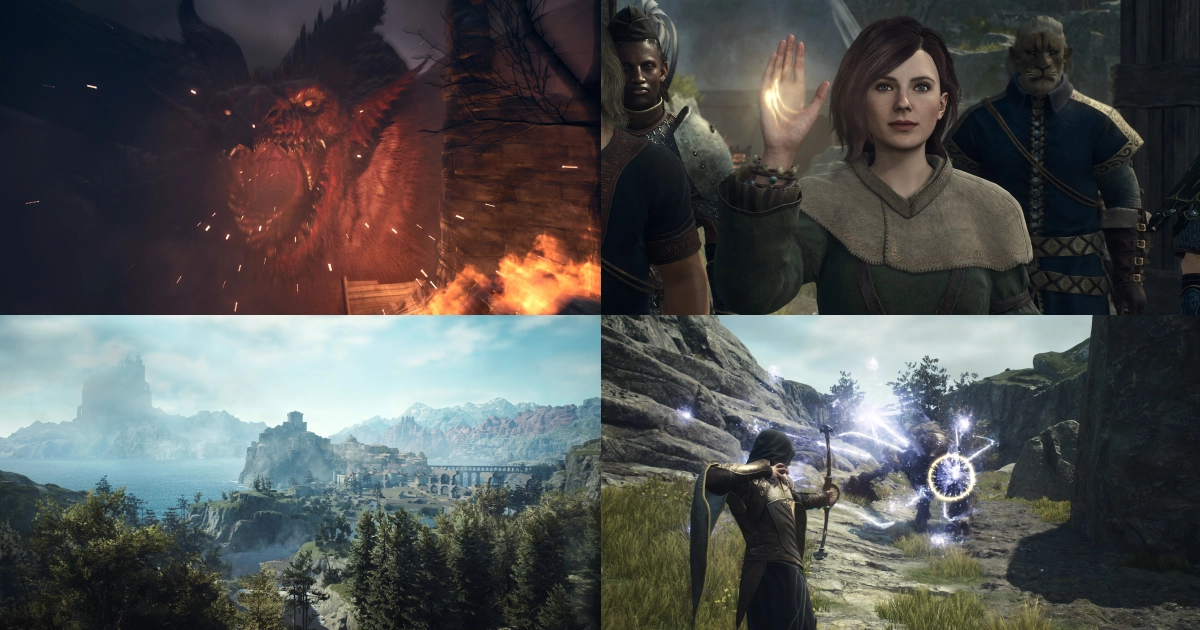 Forget everything you know about standard companions in RPGs. Your loyal Pawn in Dragon’s Dogma 2 isn't a silent shadow or a set of predictable lines. It's a living, breathing, sometimes maddeningly chatty companion who will comment on your every step, from fighting a goblin to finding a secluded spot in the bushes. My personal Pawns have managed to discuss my battle tactics, praise the scenery, complain about hunger, and ask if it's time for us all to rest while I was trying to sneak up on an enemy unnoticed. This system creates an incredible feeling of traveling with a real person — sometimes helpful, sometimes annoying, but always real.
And the combat... The combat here is pure, undiluted poetry of chaos. When you're scrambling up a cyclops's back to plunge a sword into its single eye while your mage freezes its leg and your Thief Pawn distracts it, desperately dodging its club — you understand what this game was made for. The physics and weight of every blow are palpable, and the freedom of interaction with the environment and huge enemies has no equal. Yes, the world might seem empty to those expecting a question mark every ten steps, but here the whole story is your personal adventure, not checking boxes on someone else's list. You just walk towards a tall tower, and something epic happens along the way.
Fallout 4
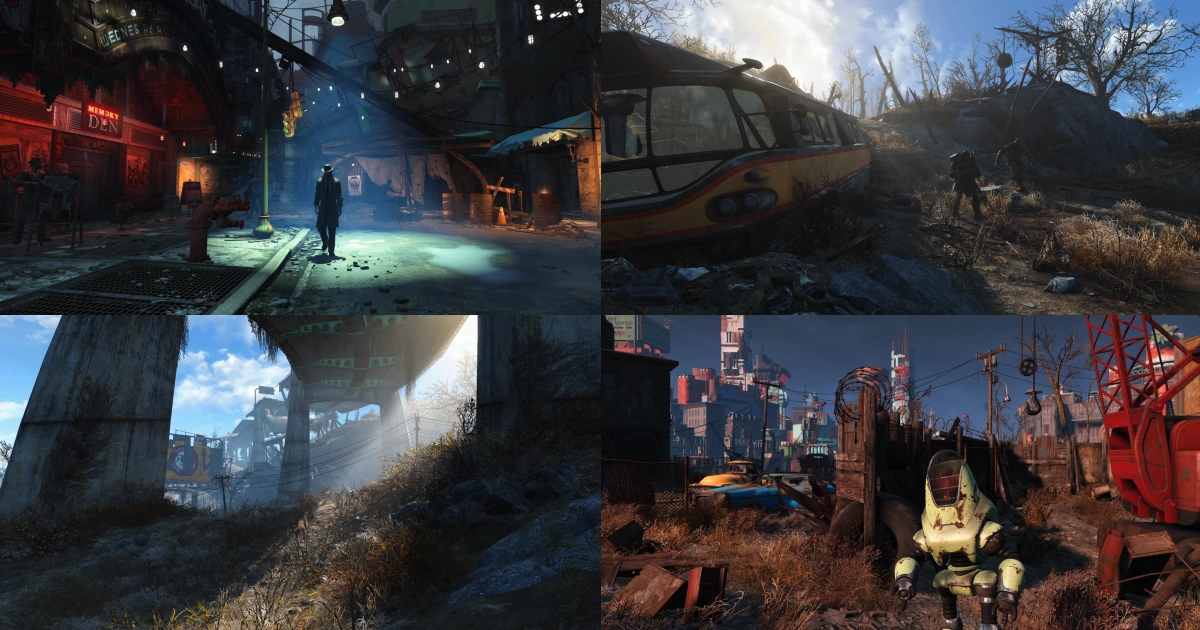 Imagine standing on the threshold of the vault, and for the first time in two hundred years, the view of the scorched Commonwealth opens before you. The sky is painted in a nuclear sunset, and on the horizon loom the skeletons of Boston's skyscrapers. At this moment, Fallout 4 sells you not just a post-apocalypse, but a construction set on its ruins. Yes, the main story about searching for your son can feel secondary, and the dialogue system has been simplified to "yes/no/sarcasm/ask." But the real magic begins when you put that chase aside and simply start living in this world. You're not just looking for artifacts — you're collecting every toaster and fan because from this junk you can assemble a laser turret for your settlement's defense or modify the frame of your power armor. The building system transforms from a simple side activity into an obsessive idea: you spend hours placing walls, generators, and turrets so your "Sanctuary Hills" becomes a real home for settlers. This isn't just an RPG about choice — it's a game about creation against all odds. The combat here, by the way, is the most responsive in the series, and the world is filled with such goofy and touching stories that you want to explore every nook and cranny. In the end, Fallout 4 is remembered not for the drama about Shaun, but for how you, forgetting everything else, built your perfect power armor garage in the middle of the apocalypse.
Black Myth: Wukong
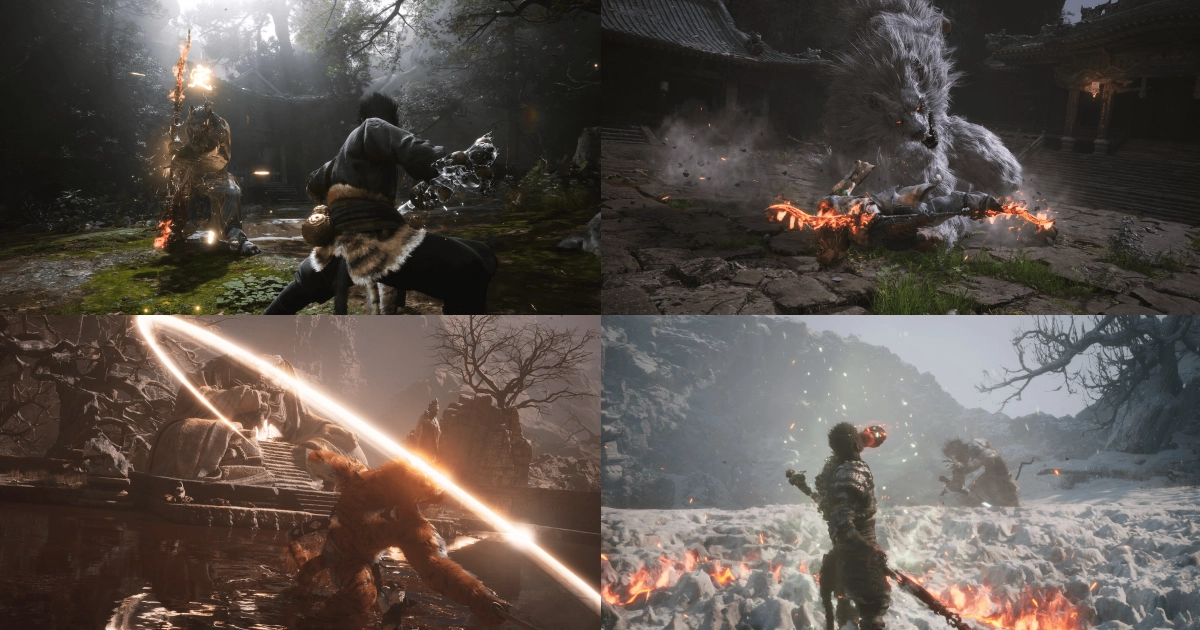 Imagine you finally gain access to the dreams you had all through childhood — the ones with blurred edges and a sense of wonder. Black Myth: Wukong is exactly that kind of game. It doesn't just adapt the classic novel "Journey to the West"; it materializes its spirit, turning mythology into a tangible, breathing world. You are the Destined One, heir to the power of the legendary Monkey King Sun Wukong, and your journey through the dying celestial kingdoms and enchanted forests feels like walking across a giant scroll painting that comes alive right under your feet.
The combat system here is a separate art form. It takes the precision and toughness of Souls games but seasons it with pure magic of transformation. Every significant boss you defeat grants you their form and abilities. One moment you're dodging the blows of a giant werewolf, the next you've become it yourself to tear apart another celestial guardian. This creates an incredible sense of progression and power. Yes, some of the transformation animations can feel a bit long after the hundredth viewing, but this minor flaw is drowned out by the thrill of a newly acquired ability.
Visually, the game is an absolute triumph. The detail of the armor, the play of light in a bamboo grove, the monstrous anatomy of bosses — a screenshot from Wukong can easily be mistaken for concept art. But the main miracle isn't even that. The main thing is the feeling of authenticity. You feel the weight of Wukong's every jump, hear the rustle of his fur in the wind, believe in the antiquity of these ruins. This isn't just "another hardcore action game" — it's a cultural phenomenon packaged in game form. And after it, all other mythological settings feel a bit cardboard.
Conclusion: Your Next Epic Quest
Ten worlds, ten unique sets of rules. This list exudes not so much nostalgia as incredible energy — each game here, even those released years ago, still feels alive. Because at the heart of any great RPG lies not just graphics or a big name, but one simple question: "What if I...?" What if I decide to save this monster instead of killing it? What if I try to play the whole game relying only on eloquence? What if I take a wrong turn and find a dragon no one mentioned?
These projects aren't museum exhibits. They are working tools for creating your own legends. And the beauty of the moment is that your personal top list will definitely be different. Someone will put the crystalline cruelty of Elden Ring first, while another will fondly remember for ten years the first time they stepped out of the vault in Fallout 4. That's the main magic of the genre.
So don't look for the objectively "best" one. Just choose the universe whose questions resonate with you loudest today. Launch it, make your first — perhaps wrong — choice, and lose yourself in it. Your epic quest is already waiting; you just need to press "New Game."