
Introduction
Video games have long moved past simple flashes and enemies that vanish after a few hits. Modern titles use brutality as part of the gameplay, the art style, and even the storytelling. Some turn combat into a bloody spectacle, others reveal the terrifying side of human nature, and a few force you to think about the cost of survival.
This list brings together 10 brutal games where violence is a core part of the experience. You'll find merciless fighting games, gory action titles, horror, and grim stories that definitely aren't for everyone.
DOOM Eternal

In DOOM Eternal, brutality becomes the backbone of the game's rhythm. Demons attack in waves, the arsenal lets you tear enemies apart, and flashy glory kills reward an aggressive playstyle. The game literally pushes you to keep moving, keep attacking, and find new ways to destroy everything in your path.
Beneath the bloody spectacle lies a demanding shooter where you have to manage ammo, health, and positioning. Simply shooting everything that moves isn't enough: you survive by turning chaos into a system.
The Doom Slayer's arsenal deserves special attention. Every weapon is built for specific situations, and smart switching between guns lets you take down even the most dangerous enemies quickly. Plasma rifles, shotguns, and heavy weapons turn the arena into pure hell, where stopping almost guarantees death. The brutality here serves the pacing: you control the scale of the destruction.
Mortal Kombat 11

Mortal Kombat 11 continues the series tradition where brutality has long been part of its signature style. Fatalities turn victory into a standalone scene of deliberately exaggerated violence, and the roster variety lets every player find their own fighting style.
But the game isn't carried by shocking finishers alone. Combos, counters, spacing, and reading your opponent make it a fully competitive fighting game. The gore grabs attention, but real victory comes down to skill.
Character design plays a major role too. Scorpion, Sub-Zero, Shao Kahn, and the rest of the roster each bring their own moves, weapons, and abilities, so fights differ mechanically and visually. Fatal Blow lets you turn the tide of a tough match, while Brutalities and Fatalities pile on even more savagery. Mortal Kombat 11 pushes fantastical violence into the grotesque, turning every round into a spectacle no other fighting game can match.
Hatred

Hatred holds a unique place among violent video games thanks to its deliberately provocative approach. It's an isometric action game built around a grim atmosphere, merciless shootouts, and an extremely dark protagonist.
Unlike most action games where violence is justified by saving the world or fighting evil, Hatred makes provocation the core of its concept. That's exactly why the game sparked so much controversy: its content is designed to shock, not to deliver a familiar heroic adventure.
The monochrome palette, bleak streets, and cold presentation amplify the sense of hopelessness. Hatred's visual style intentionally strips away bright colors, making the shootouts feel especially harsh. The game doesn't offer a complex moral system or a deep psychological study of its hero: its provocative intent is brutally straightforward. That uncompromising approach made it one of the most talked-about examples of games using violence purely for shock value.
Postal 2

Postal 2 offers open locations, dark humor, and a level of freedom pushed to the absurd. You complete mundane errands, but nearly every situation can spiral into chaotic conflict with the world around you.
The violence here is tightly woven with satire and deliberately offensive jokes. The game constantly walks the line between provocation and grotesque, mocking social norms and familiar gaming conventions. It's one of the most scandalous entries in the genre, even though it looks and plays noticeably dated compared to modern titles.
The freedom of choice lets you approach missions in different ways, and the world's reaction to your actions often turns ordinary situations into absurd scenes. Postal 2's humor is intentionally crude, provocative, and far from pleasant. The game mocks violence, social stereotypes, political moods, and the gaming industry itself. Its brutality exists on the border between satire and outright shock value, and many moments stick with you precisely because of how ridiculous they are.
Dead Island 2

Dead Island 2 turns zombie destruction into the main event. Thanks to the damage system, enemies react differently to hits and weapons, and melee combat comes with expressive visual effects.
You explore a sun-drenched Los Angeles, scavenge weapons, and fight off hordes of infected. The contrast between the city's vacation vibe and the chaos around you creates a unique mood: instead of endless gloom, the game serves up bloody action with dark humor.
The improvised weapon system is especially interesting. Electricity, fire, acid, and other effects let you switch tactics depending on the enemy type and your surroundings. You can upgrade weapons, combine mods, and use the environment to handle large groups of infected. That keeps the bloody encounters from turning into repetitive button-mashing: the damage system constantly reminds you that every zombie is its own puzzle.
Wolfenstein II: The New Colossus

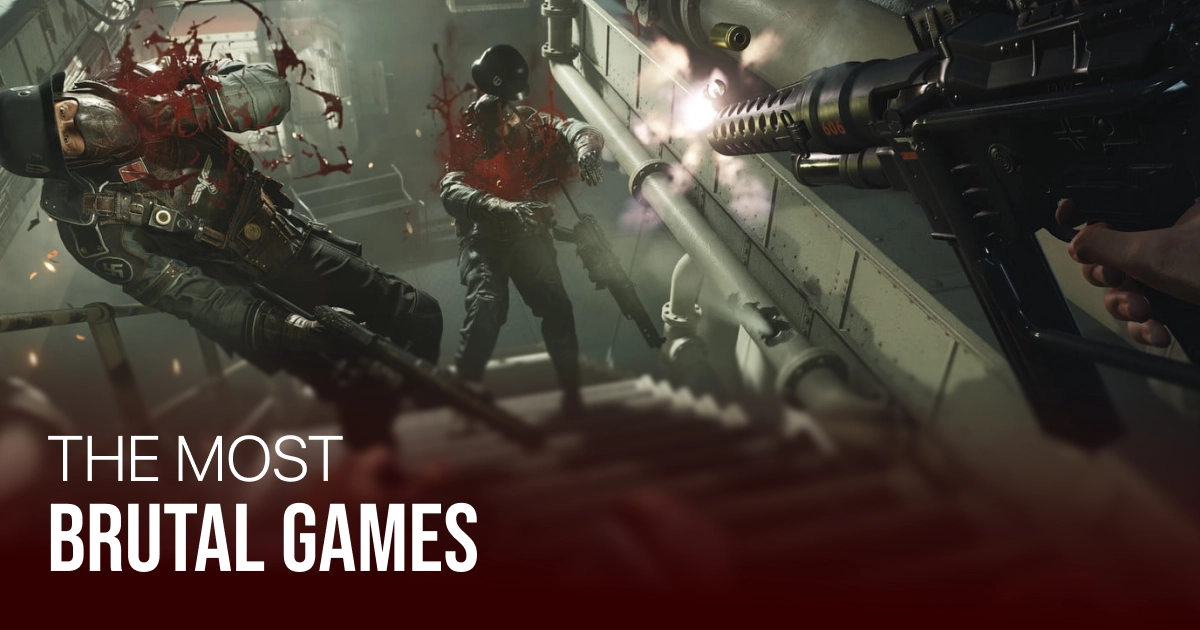
Wolfenstein II: The New Colossus pairs fast-paced shootouts with a brutal depiction of an alternate history where the Nazi regime has taken over America. You fight armed enemies, wield heavy weapons, and push through countless enemy positions.
The violence highlights the inhumanity of the regime. The game isn't endless shooting either: the story touches on resistance, fear, personal loss, and the consequences of living in a world where violence has become a tool of power.
Beyond the gunfights, the game stands out for its contrast between dark humor, personal drama, and genuinely grim moments. Blazkowicz fights a system that turned an entire country into a machine of oppression. The harsh scenes underscore the brutality of the occupation and reveal the resistance's motivation. That gives the violence a more concrete purpose: behind the flashy combat lies a story about the fight for freedom.
Resident Evil Village

Resident Evil Village uses brutality differently. Here it becomes part of the horror atmosphere: dangerous enemies, creepy locations, and sudden encounters constantly remind you how vulnerable you are.
Protagonist Ethan Winters searches for his daughter in a mysterious village filled with terrifying creatures. The game mixes gunfights with exploration and puzzles, and some sequences lean less on blood and more on psychological discomfort. That balance keeps Resident Evil Village tense even in relatively calm moments.
The enemy variety makes every encounter potentially deadly. Lycans attack in packs, larger enemies demand serious firepower, and limited resources force you to count every shot. Some sequences nearly strip you of any ability to fight back, replacing standard action with running and hiding. That contrast between armed resistance and complete helplessness shows that true horror brutality is the constant anticipation of the next threat.
The Last of Us Part II Remastered

The Last of Us Part II Remastered portrays violence as a heavy consequence of human decisions. Combat encounters are intense, and the animations, sound design, and character reactions amplify the weight of what's happening.
But the game's real strength lies in context. The story explores revenge, hatred, and the destructive aftermath of brutality, gradually blurring the line between hero and enemy. Violence here rarely feels like harmless entertainment: behind it are human losses and moral consequences.
The details of character behavior add extra weight. Enemies talk to each other, react when their comrades go missing, and try to flank you, while infected encounters demand a completely different approach. That makes the gunfights feel less abstract than in most action games. Even a small skirmish can spiral into serious consequences, and the combination of realistic animations and tense sound design deepens the emotional impact of every fight.
Sniper Elite 5

Sniper Elite 5 focuses on tactical kills and precision. The protagonist operates in World War II France, taking out enemy units, infiltrating guarded facilities, and carrying out sabotage missions.
The signature X-ray kill cam shows the aftermath of your shots in slow motion. These scenes highlight the physical reality of gun violence, though you can also focus on stealth. The brutality becomes part of the military aesthetic and the mechanics of precision shooting.
The tactical layer lets you choose your approach to every mission. You can stay hidden, distract guards, set traps, or find vantage points for long-range shots. The signature kill cam emphasizes shot placement and the physical consequences of firearms, but you can adjust its intensity if you want. That approach makes Sniper Elite 5 more than just a gore fest: it's a military action game where preparation and calculation often matter more than open combat.
NINJA GAIDEN 2 Black

NINJA GAIDEN 2 Black delivers fast-paced action where enemies attack aggressively and mistakes quickly lead to death. The protagonist fights waves of enemies using swords, throwing weapons, and other deadly tools.
The blood effects highlight the intensity of melee combat, but the game's real brutality lies in its difficulty. You constantly have to react to threats, pick your moment to strike, and use your available moves wisely. The enemies are merciless, and so is the game itself.
The high-speed combat demands constant focus: enemies attack from multiple directions, never let you linger in one spot, and punish failed combos. The variety of weapons and techniques lets you adapt, but even a powerful character never becomes invincible. The brutality here comes through in the gore and the relentless pace. Every victory feels earned because the game rarely lets you relax, even after several successful fights.
Conclusion
These ten titles show that violence in games is about more than how much blood is on screen. Sometimes it's spectacle, sometimes it amplifies fear, and sometimes it tells a story that leaves you unsettled for reasons that have nothing to do with monsters.
Which of these games is the most brutal? It depends on what you consider the main factor: visual savagery, combat difficulty, or the psychological weight of what's happening. Either way, these games are definitely not for anyone looking for a calm gaming evening.