
Some games hand you a ready-made world and ask you to figure out what's going on in it. Then there's a completely different kind of adventure, one that starts from almost nothing. A few resources, a small plot of land, a couple of tools, and total freedom. No pre-written script to follow. Just your decisions and their consequences, which gradually turn into a whole story.
Some projects let you build a cozy settlement in the middle of the wilderness, others put you in charge of sprawling cities, industrial development, or an entire civilization of your own making. And sometimes construction is just the beginning: new houses bring residents, an economy, trade, transport networks, and entire systems you have to keep running.
Valheim

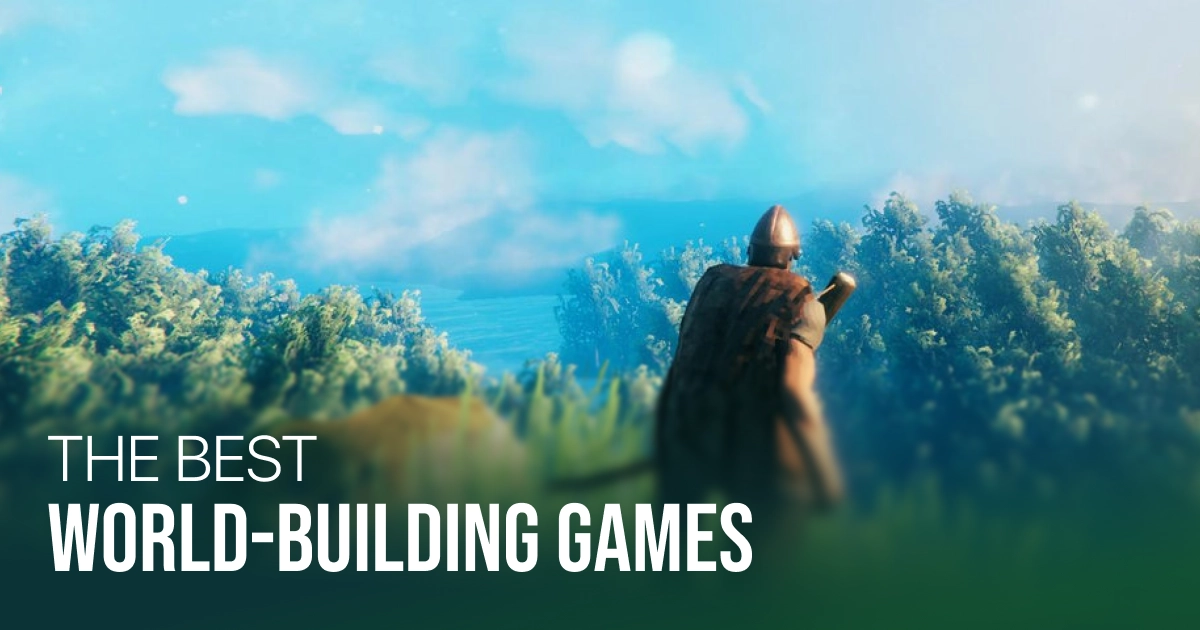
In Valheim, building doesn't start with architectural plans. It starts with trying to find a safe spot where the local wildlife won't eat you. This harsh world inspired by Norse mythology throws you into survival, biome exploration, battles with mythical creatures, and the slow process of carving out your own shelter.
Over time, a small wooden hut can grow into a full base with workshops, warehouses, farms, defensive structures, and docks. Building is tightly linked to exploration here: new materials mean venturing into dangerous places, and defending your settlement means constantly improving. Valheim shines because the world you create becomes a record of your shared adventures, especially when you play with friends.
Manor Lords

A medieval settlement in Manor Lords doesn't appear with a single click. You start with a small group of settlers, a few supplies, and a plot of land where the future of an entire region will take shape. You need to place residential plots wisely, organize production, develop trade, and keep an eye on what your people need.
The game's appeal lies in its commitment to historical authenticity. City layout depends on the terrain, roads follow the land, and the economy grows through the work of your residents. Managing the settlement goes beyond construction too: you'll handle diplomacy, expand your territory, and even take part in large-scale battles. You're building a medieval town. You're deciding what an entire region becomes.
Town To City

If you want a break from endless wars, economic crises, and survival struggles, Town To City offers a calmer way to build your own world. It's a cozy city-building sim where a small settlement gradually grows into a thriving town.
You can plan streets yourself, place houses, decorate squares, create gardens, and think through the layout of public buildings. The game puts a strong emphasis on building freedom: there's no strict grid forcing your hand, so you can develop your settlement however your imagination takes you. As the town grows, new residents, professions, and needs appear. The goal is a place where people would actually want to live.
Workers & Resources: Soviet Republic

In Workers & Resources: Soviet Republic, building your own world becomes a massive economic experiment. You're tasked with constructing a socialist republic from scratch, organizing its industry, infrastructure, and supply chains on your own.
Placing a factory and waiting for profit isn't enough here. Enterprises need workers, raw materials, electricity, transport, and plenty of other resources. You'll lay railroads, build residential districts, set up public transit, and make sure goods reach consumers on time. The game also lets you develop production independently and gradually phase out imports. Workers & Resources: Soviet Republic turns construction into a complex web of interconnected processes, where even a small mistake can disrupt an entire state.
Sweet Transit

In Sweet Transit, everything revolves around railroads. You'll build your own transport network, connect cities and industrial facilities, and gradually turn small settlements into developed hubs.
Trains here also carry freight. They deliver raw materials to factories, finished goods to shops, and keep different districts connected. That means planning routes carefully, watching track congestion, and expanding infrastructure before it becomes a bottleneck. A small railway line slowly grows into a massive transport system that entire cities depend on. It's a strategy game about how railroads can literally build a civilization.
Technicity

Technicity looks at city building from a completely different angle. Instead of managing a city through a map, you explore the space in first person and build directly inside the game world.
You can construct buildings, lay roads, create transport infrastructure, and experiment with architecture. Building isn't limited to ready-made templates either: you get enough freedom to design all kinds of structures yourself. Start with a small house and gradually turn empty land into a huge modern city. Watching the results of your work while standing on the streets of the metropolis you built is especially satisfying.
Whiskerwood

Who says building your own civilization requires humans? In Whiskerwood, the main residents of your settlement are tiny mice who need to make a life for themselves in fairly tough conditions.
You'll organize a colony, build housing, develop production, and keep your residents supplied with everything they need. New expansion options appear over time, and with them comes more management complexity. Building placement, resource availability, and the needs of your mouse population all matter. Beneath the cute exterior is a serious city-building sim where you'll handle logistics, economics, and the growth of an entire colony.
HUMANKIND

In HUMANKIND, the scale of building goes far beyond individual cities. You'll create your own civilization and guide it through historical eras, deciding the direction of your society's development yourself.
One of the game's standout features is the ability to combine cultural traits from different peoples. Instead of following a predetermined historical path, you can pick new cultures at each stage of development, shaping a unique civilization. Along the way you'll found cities, advance science, trade, military, and diplomacy. The result is your own alternative history of humanity, where your decisions determine the mark your civilization leaves on the world.
Rise of Industry 2

In Rise of Industry 2, building your own world takes on an industrial scale. You'll construct a true economic empire, managing production, trade, and logistics in the setting of 1980s American industry.
It starts with a small business that can grow into a vast network of enterprises. You'll find raw material suppliers, organize production chains, move goods, and watch market demand. Some factories will produce components for others, while finished products head to buyers. Success depends on how well the whole system is built. In Rise of Industry 2, your world isn't made of houses and streets so much as factories, trade routes, and interconnected production processes.
Medieval Dynasty

In Medieval Dynasty, it all starts with one person trying to find their place in a medieval world. Solo survival gradually turns into building your own settlement, and then into growing an entire dynasty.
You'll gather resources, hunt, farm, build houses, and attract new residents. Each settler can take on a specific job, so over time a small village becomes a self-sufficient community with divided responsibilities and a working economy. But the story doesn't end there: you can start a family, raise heirs, and carry on your work through generations. It's a building sim. It's a story about how a settlement emerges from nothing and one day becomes a real legacy.
Build a World on Your Own Terms
The best part of these games is that every world turns out completely different. Someone will want to build the perfect medieval city, someone else an industrial powerhouse, and for others a small village in the woods is more than enough.
That freedom of choice is what makes these projects special. There's no single correct way to develop, and the outcome depends entirely on the player's decisions. You can spend hours rearranging streets, optimizing production, or just watching life unfold in the settlement you created. And sometimes that process turns out to be far more interesting than any scripted adventure.