

Video Games That Don't Rush to Explain Themselves
Not every good game needs massive battles, hundreds of side quests, and yet another world to save. Sometimes a strange room, a few words from a stranger, or a detail in the background is enough to make you want to figure out what's actually going on.
Some developers tell stories through conventional dialogue and cutscenes. Others use the gameplay itself as a storytelling tool: they make you hunt for hidden meanings, question what you see, and piece together the picture on your own. Here, the player takes part in interpreting the plot.
We've gathered eight games for anyone who appreciates unconventional presentation, atmosphere, and stories that linger long after the credits roll.
Superliminal

Genre: first-person puzzle.
In Superliminal, the usual laws of space become a tool for solving puzzles. Objects change size depending on perspective, and what looks like a decorative detail can turn out to be the key to the next room.
The game's main hook is how it forces you to rethink the world around you. Carefully scanning a room isn't enough: you have to change your entire approach to space. A small object can become huge if you use perspective correctly, and the obvious path sometimes turns out to be a trap for your own perception.
Superliminal is a bag of scale tricks, though. Gradually, the puzzles come together into a story about perception, control, and trying to break free from familiar patterns of thinking.
It's a great pick for anyone who loves games that impress not with the amount of content, but with one well-executed idea.
Darkwood

Genre: survival horror.
In most horror games, the player eventually gets an explanation of where the threat came from and how to fight it. Darkwood prefers to leave questions unanswered for a while.
The game takes place in a grim forest where exploring the surrounding area comes with constant risk. During the day you have to scavenge for resources and plan routes, and at night you defend your shelter from creatures that can turn another attempt to survive the darkness into a disaster.
The presentation is especially effective. The game doesn't rely on constant jump scares. Instead, it builds tension through sound, limited visibility, scarce resources, and the unknown. Even a familiar place stops feeling safe over time.
Darkwood is also interesting because it leaves room for your own interpretation of events. The player gradually learns more about the world, but never gets a handy manual explaining every oddity.
If you want a horror game that leans on atmosphere and psychological pressure rather than just monsters popping out, this one deserves your attention.
Röki

Genre: adventure, puzzle.
Röki uses Scandinavian folklore as the foundation for a story where fairy-tale creatures and mysterious places become part of a personal journey.
The story centers on Tove, who sets out to find her brother. Along the way, she explores an unusual world, interacts with its inhabitants, and solves puzzles tied to the environment.
There's no need to constantly fight to make progress. Observation, exploration, and an eye for detail play the main role. Many obstacles don't require quick reflexes, but rather an understanding of how a particular place works and what you can do with the items you find.
Röki's visual style feels like an illustrated fairy tale come to life, but beneath the soft exterior lies an emotional story about family, fear, and loss.
This is an adventure for those who prefer to explore a world at their own pace and gradually uncover its secrets.
The Life and Suffering of Sir Brante
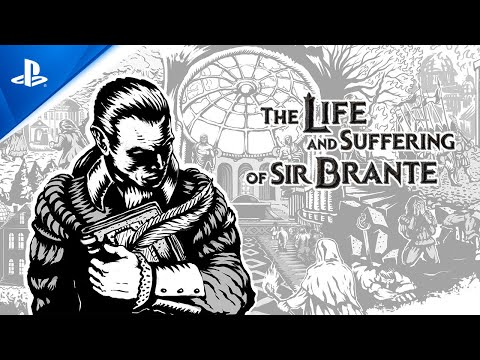
Genre: narrative RPG, interactive novel.
In The Life and Suffering of Sir Brante, the story is built around decisions that shape not only the protagonist's fate, but also his relationships with the society around him.
The player follows the character's life from an early age and gradually confronts questions of faith, power, social divides, and personal convictions. Every decision can open some doors and close others, and the consequences often surface much later.
Choices here aren't always split into obviously right and wrong. Sometimes you have to decide what matters more: your own safety, loyalty to your principles, or the well-being of others. And the game doesn't promise that noble intentions will lead to a good outcome.
Unlike projects where dialogue serves as brief pauses between fights, Sir Brante makes text and decisions the core of the entire experience. Attention to detail and understanding the world around you matter just as much as your character's stats.
It's a solid pick for fans of complex moral dilemmas and stories where the consequences of your choices actually carry weight.
Florence

Genre: interactive story.
Florence proves that you don't need long dialogue, a sprawling world, or a complex quest system to tell an emotional story.
The game follows the relationship between a young woman named Florence and a musician named Krish. Instead of traditional storytelling, it uses short interactive episodes, visual metaphors, and simple actions that reflect different stages of a relationship.
Some moments are conveyed through small puzzles. Others are built on the rhythm of interaction, shifts in visual presentation, or the contrast between how the characters see each other at different points in their lives.
As a result, you take part in scenes that convey the characters' state of mind. Ordinary everyday situations gain meaning, and small changes in the characters' behavior say more than lengthy explanations.
Florence is for anyone who wants to see how a video game can work with emotions and personal experiences without turning them into yet another grand drama.
I Have No Mouth, and I Must Scream

Genre: psychological adventure, point-and-click.
Some games use a dark atmosphere as set dressing. I Have No Mouth, and I Must Scream builds nearly its entire narrative around it.
The story takes place in a world where an AI named AM has wiped out humanity, sparing only five people. It subjects them to psychological torment, exploiting each person's fears, weaknesses, and painful memories.
The player explores the characters' stories and makes decisions in situations where conventional ideas of the right thing to do fall short. The heroes' pasts shape their behavior, and overcoming their own weaknesses becomes a key part of the journey.
The game tackles heavy themes: cruelty, guilt, hatred, and the nature of human dignity. Its narrative offers no easy answers and forces you to think about what remains of a person when someone else holds absolute power over their existence.
It's an unusual choice for fans of psychological stories and classic adventure games where decisions matter more than combat skills.
Black Mirror

Genre: adventure, detective.
Black Mirror offers a story where the family's past becomes a source of new questions, and exploring an old estate gradually turns into an investigation.
The protagonist returns to the family manor after his father's death. Instead of a calm settling of affairs, he finds a tangled story of family secrets, strange events, and a legacy that isn't easy to leave behind.
Your main tool here isn't a weapon, it's attention. You need to examine rooms, search for clues, talk to characters, and piece together the information you find. Individual details only gain meaning when they become part of a bigger picture.
The manor plays a major role in building the atmosphere: the architecture, the interior objects, and the surrounding locations all reinforce a sense of unease and uncertainty.
Black Mirror will appeal to fans of gothic detective stories, family secrets, and narratives where progress depends on your willingness to dig for the truth.
A Memoir Blue

Genre: interactive adventure.
A Memoir Blue tells a story about memories, the relationship between a mother and daughter, and an adult trying to make sense of her own past.
Instead of a conventional quest system, the game uses visual imagery and small interactive scenes. Water, objects, and the surrounding space help convey the protagonist's memories, which gradually come together into an emotional narrative.
Symbolism plays a key role here. The game doesn't always explain the meaning of what's happening directly, so individual scenes have to be taken as fragments of a personal story. Their significance becomes clearer as you progress.
A Memoir Blue doesn't try to impress with complex mechanics. Its strength lies in its restraint and its ability to convey feelings through visual form, music, and interaction with the environment.
It's a short adventure for those who appreciate auteur projects and want a game that offers not another test of reflexes, but a chance to immerse yourself in someone else's memories.
Why These Games Deserve Attention
The projects listed here span completely different genres and approaches to storytelling. Superliminal experiments with space, Darkwood uses the unknown to build tension, and The Life and Suffering of Sir Brante turns decisions into the backbone of its story. Florence and A Memoir Blue, meanwhile, show that emotional impact doesn't depend on the scale of what's happening.
What unites them is this: they ask the player to make sense of what they've seen.
In games like these, the details you might easily miss, the decisions whose consequences don't surface right away, and the moments whose meaning only becomes clear later all matter. That's why they can stick with you even without dozens of hours of playtime.