
Every friend has their own life, job, and evening plans. Getting everyone together can be harder than beating a final boss. But distance isn't much of a problem for a good group: just agree on a time, fire up the game, and connect to a shared server.
The thing is, not every multiplayer game keeps people interested. You can play a couple of matches today and forget the game exists tomorrow. It's a different story when the team has a shared goal: clear a tough mission, build a base, take down a huge monster, or finally finish a heist that went off the rails last time.
We've gathered 10 co-op games from the AltMarket catalog where playing together becomes an adventure of its own. You'll find tactical shootouts, monster hunting, open-world exploration, racing, and even team furniture moving. Pick a format that suits you and get your voice chat ready.
World War Z - Survival Depends on the Whole Team

Genre: co-op shooter, action
Players: up to 4 in the co-op campaign
In World War Z, an ordinary walk through the city quickly turns into a fight for survival. Streets fill with huge crowds of zombies, passageways get blocked, and the team has to push through infected areas, complete objectives, and hold positions.
The game leans hard on team play. You have to watch your ammo, help teammates, use defensive structures, and pick the right moment to attack. When too many enemies show up, trying to go solo usually ends the way you'd expect.
At the same time, World War Z isn't only for one long campaign. You can team up for a few missions, bump up the difficulty, and try new character classes. The gradual progression gives you a reason to come back.
Why play with friends: team shooting, tense situations, and a clear objective in every mission. A good pick for a group that loves fast action and doesn't want to spend half the evening getting ready for the adventure.
Core Keeper - An Underground World You'll Want to Explore Together

Genre: adventure sandbox, survival
Players: up to 8 online
Core Keeper starts with exploring a mysterious underground world but quickly grows into a large shared adventure. Players gather resources, craft tools, build a base, find treasure, and fight dangerous creatures.
The main joy here comes from gradual progression. First the team sets up a modest shelter, then claims new territory, upgrades gear, and prepares for tougher enemies. Every resource you find can be useful for the next leg of the journey.
The game really shines with a group. One player gathers materials while another explores nearby caves and the rest craft gear or build up the base. Then everyone meets up for the next boss or expedition.
Core Keeper doesn't rush you and lets the group set its own pace. You can spend an evening building, or head into an unexplored part of the world and come back with a whole collection of problems and useful finds.
Why play with friends: shared progress, exploration, building, and lots of goals that are easy to split up among the group. A great candidate if you want a game for several weeks.
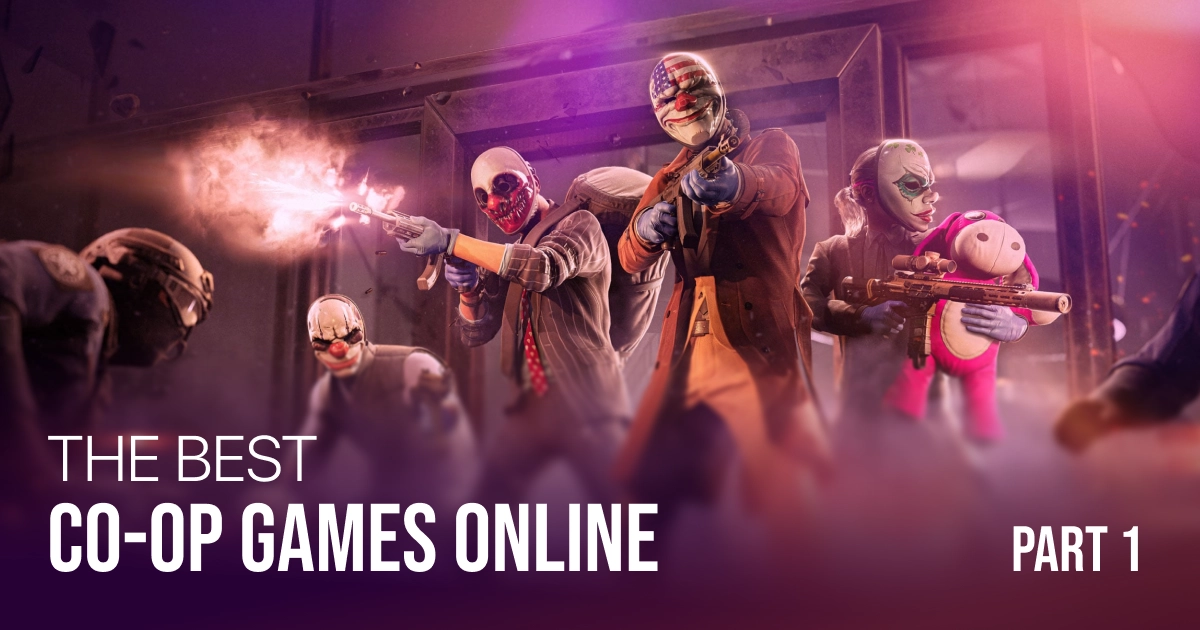
PAYDAY 3 - A Heist by Plan. If a Plan Exists at All

Genre: co-op shooter, heists
Players: up to 4
PAYDAY 3 invites you to assemble a team of professional robbers and take on jobs where preparation, coordination, and quick reactions matter.
Every heist can be approached differently. Sometimes it's better to stay quiet and avoid attention. Other times everything turns into a shootout, and you have to cover teammates, control enemies, and find a way to the objective.
That's the main appeal for a group of friends. You need to talk through decisions beforehand, and when things get tense, everyone has to know their job. Even a small mistake can derail the operation and force the team to improvise.
PAYDAY 3 works well for regular game nights because individual jobs let you get together without replaying a long story campaign from the start every time. You can sharpen your tactics, try different ways to complete missions, and gradually improve your crew.
Why play with friends: the game rewards coordination and communication. If you enjoy discussing plans, assigning roles, and fixing the consequences of your own mistakes together, there's plenty to do here.
Borderlands 4 - A Shared Hunt for Weapons and Adventure

Genre: role-playing shooter, action
Players: up to 4 in online co-op
Borderlands 4 continues the series tradition of mixing travel through dangerous territory with fast shootouts, unusual characters, and an endless hunt for better weapons.
Players pick heroes with different abilities and gradually develop them, unlocking new upgrade options. Along the way, the team completes quests, fights enemies, explores locations, and collects gear.
One reason to keep coming back to Borderlands 4 is constant character progression. Got a new gun? Try it in the next fight. Unlocked a useful skill? Time to switch up your usual tactics. And if a friend finds an especially good skill combo, that's a reason to talk builds and try something similar.
Playing co-op lets you combine different playstyles and move through the campaign together. It's a good option for friends who like story-driven action but want goals beyond the main story.
Why play with friends: a shared campaign, character progression, varied combat, and a constant hunt for upgrades. Great for a group willing to return to the same game world for new missions and stronger characters.
Tom Clancy's The Division 2 - Tactics, Gear, and a Shared Objective
Genre: tactical shooter, RPG
Players: up to 4 in the main co-op group
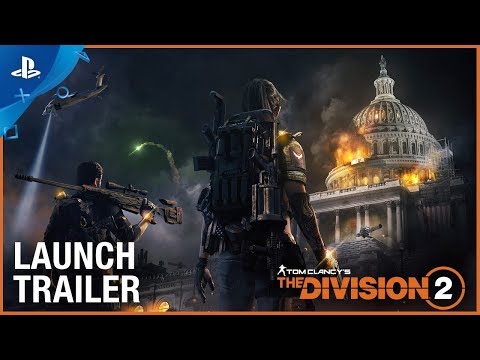
The Division 2 drops players into Washington, D.C., struggling with the aftermath of a massive crisis. The city is split between warring factions, and agents have to complete missions, liberate areas, and restore control over key districts.
The game mixes shootouts with an RPG progression system. You need to aim well, but you also have to choose gear, develop abilities, and account for what the rest of the squad can do.
One of The Division 2's strengths is that co-op play goes beyond completing individual missions. You can return to familiar locations, hunt for better gear, do side activities, and prepare for tough challenges.
Players can fill very different roles. One focuses on damage, another supports the team with buffs, and a third prefers crowd control. Success depends on how well the whole squad works.
Why play with friends: long-term character development, tactical fights, and plenty to do after the main campaign. Good for those who want to pick one game and stick with it for a long time.
Minecraft - A Shared World That Belongs to Your Group
Genre: sandbox, survival, adventure
Players: depends on how you set up multiplayer
Minecraft has long outgrown being just a block-building game. In a shared world, friends can create their own settlement, explore caves, mine rare resources, build complex machinery, and prepare for boss fights.
Minecraft's biggest advantage is freedom. The game doesn't force you along a strict scenario, so the group decides what to do each day. You can spend an evening building a huge castle, head into the Nether, or finally finish the railway someone started weeks ago.
Co-op survival becomes especially interesting when you split up responsibilities. Some players keep the team supplied with resources, others build the base, and others explore the map and look for upgrade materials.
Minecraft is also perfect for long-term projects. A group can set up its own server, make shared building plans, and build a tradition of returning to the same world after work or school.
Why play with friends: nearly unlimited freedom, shared building, and the chance to create your own goals. If you want to make your own story instead of playing through someone else's, Minecraft remains one of the most flexible options.
Monster Hunter Wilds - A Hunt Where Preparation Matters

Genre: action adventure, monster hunting
Players: up to 4 hunters in co-op
Monster Hunter Wilds is built around fights with huge monsters, each of which demands its own approach. Players explore the world, study monster behavior, choose weapons, and craft gear from harvested materials.
You can't just keep attacking. You need to read the monster's movements, use the right weapon strengths, and react in time to dangerous attacks. Good preparation significantly improves your odds.
Co-op hunts add depth. Different weapon types let players contribute in different ways, and a coordinated group can handle dangerous monsters more efficiently. After a victory, the materials you collect help craft stronger gear and get ready for the next hunt.
That progression loop makes Monster Hunter Wilds ideal for regular meetups. There's always another monster, a needed material, or an armor set that makes you want to head out again.
Why play with friends: team fights, the need to coordinate, and clear long-term progression. It'll especially appeal to players who love tough enemies and the satisfaction of a win earned through preparation.
RoadCraft - Teamwork Without Gunfire or Saving the Galaxy

Genre: vehicle simulator, construction and infrastructure repair
Players: up to 4 in co-op
In RoadCraft, instead of hunting monsters or gunfights, you get damaged roads, broken infrastructure, and heavy machinery. The team's job is to restore areas, clear debris, and organize the transport of needed materials.
Planning and order of operations matter here. You have to assess the terrain, choose the right equipment, deliver resources, and decide what to tackle first. Sometimes the challenge isn't any single task, it's organizing the whole process.
Co-op makes these tasks more interesting. Players can split up duties, use different vehicles, and work toward a result together. A chaotic area gradually turns into working infrastructure, and completed jobs open the way for further progress.
RoadCraft suits a group that wants to try something a little different. Instead of constant shooting, you get a calm but attention-demanding interaction with the world around you.
Why play with friends: shared tasks, planning, and a real sense of accomplishment. A good choice if you'd rather organize complex work together than compete on reaction speed.
Moving Out 2 - Team Moving with Unpredictable Results
Genre: co-op arcade, physics puzzle
Players: up to 4 in local and online co-op
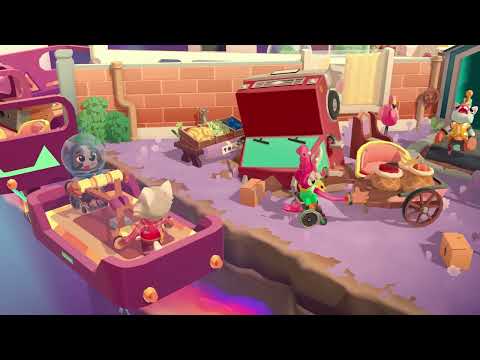
Moving Out 2 turns an ordinary move into a series of comedic challenges. Players carry furniture and other objects, overcome obstacles, and complete timed tasks. The catch is that the physics and level design keep getting in the way of doing things neatly.
Large items have to be carried by two people, routes need to account for nearby obstacles, and sometimes it's smarter to sort out where everything sits rather than immediately grabbing the nearest couch.
Co-op really brings the game to life because of the communication. One person suggests a route, another tries to keep the furniture steady, and a third accidentally creates another problem. Even a simple task can turn into a story the group talks about after the level ends.
Moving Out 2 also doesn't demand dozens of hours to learn complex mechanics. You can meet up for a short session, clear a few levels, and come back next time.
Why play with friends: accessible gameplay, physics puzzles, and plenty of moments that only happen because you're playing together. A great option for evenings when you want a break from heavy stories and tough fights.
Forza Horizon 5 - Shared Racing Without Having to Beat Each Other Every Time

Genre: arcade racing, open world
Players: multiplayer races and shared activities
Forza Horizon 5 invites you to explore a colorful open-world Mexico, collect cars, tune them, and take part in all kinds of races. You can focus on competition, but driving around and doing activities with friends is just as fun.
Everyone can pick a car that fits their driving style, experiment with tuning, and gradually expand their garage. Some prefer fast road races, while others choose off-road vehicles and explore less obvious routes.
Unlike games where you need to clear the next story mission every evening, Forza Horizon 5 lets you choose what to do. You can set up a friendly race, try a co-op challenge, or just head out on an open-world road trip.
That's especially convenient for groups with different experience levels. You don't have to chase first place or complete hard tasks, everyone can enjoy driving at their own pace.
Why play with friends: a wide variety of cars, an open world, and the chance to organize a co-op game night without strict commitments. Good for those who prefer racing and free exploration over high-barrier competition.
Conclusion
Good co-op doesn't end with the final mission. It becomes part of the group's usual schedule: someone suggests meeting up on Friday, someone preps a character ahead of time, and someone shows up in voice chat saying "tonight will be quick, I promise."
Core Keeper and Minecraft let you build your own worlds, Monster Hunter Wilds brings friends together for tough hunts, and World War Z tests how well your team handles pressure. Even RoadCraft offers a full co-op adventure, though instead of weapons you get heavy machinery and broken roads.
Pick a game that fits your group, plan the next evening, and gradually turn co-op sessions into a tradition. And you can find the games for your next meetup in the AltMarket catalog.
Because distance gets in the way of meeting in person, but it doesn't stop you from saving the world together, building bases, and proving once again that a coordinated team can handle almost anything.